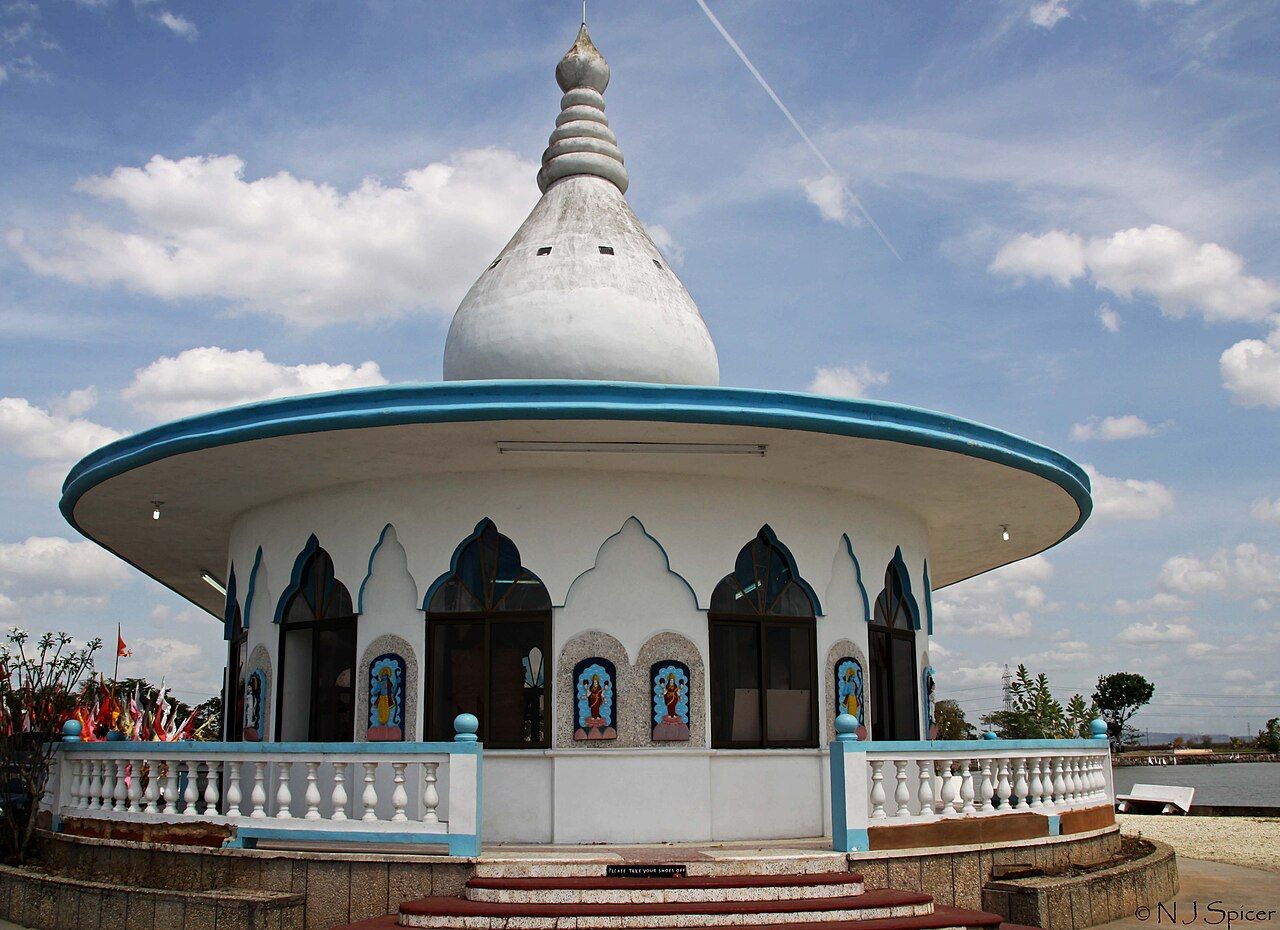
On the west coast of central Trinidad, at the village of Waterloo, a small white temple stands at the end of a causeway in the shallow waters of the Gulf of Paria. It is modest in size, but its story has made it one of the best-loved places in the country, a symbol of faith and of the persistence of the Indian community that has shaped so much of central Trinidad. A visit here is quiet and reflective, and it opens the door to a part of the island many visitors pass straight through.
Siewdass Sadhu and the temple
The temple is the work of Siewdass Sadhu, who came from India to Trinidad as an indentured labourer in the early twentieth century. He first built a small temple on land near the shore, but it stood on estate property and was ordered removed. His answer, as the story is told, was to build where no one owned the ground: in the sea itself.
For years he carried stones, sand and cement out into the shallow water, often by bicycle and by hand, raising a platform and a small temple on it. Tides, storms and time took their toll, and after his death the structure fell into disrepair. In the 1990s the temple was rebuilt, linked to the shore by a causeway, and the present building, with its white dome and blue trim, stands as a tribute to his devotion. A statue of him stands near the entrance.
It is an active place of worship, and the respect visitors show matters. Dress as you would for any temple: covered shoulders, longer skirts or trousers. Remove your shoes before you climb the steps, as the sign at the entrance asks. Keep voices low, ask before taking photographs inside, and stand aside quietly if prayers are in progress.
The shore at Waterloo
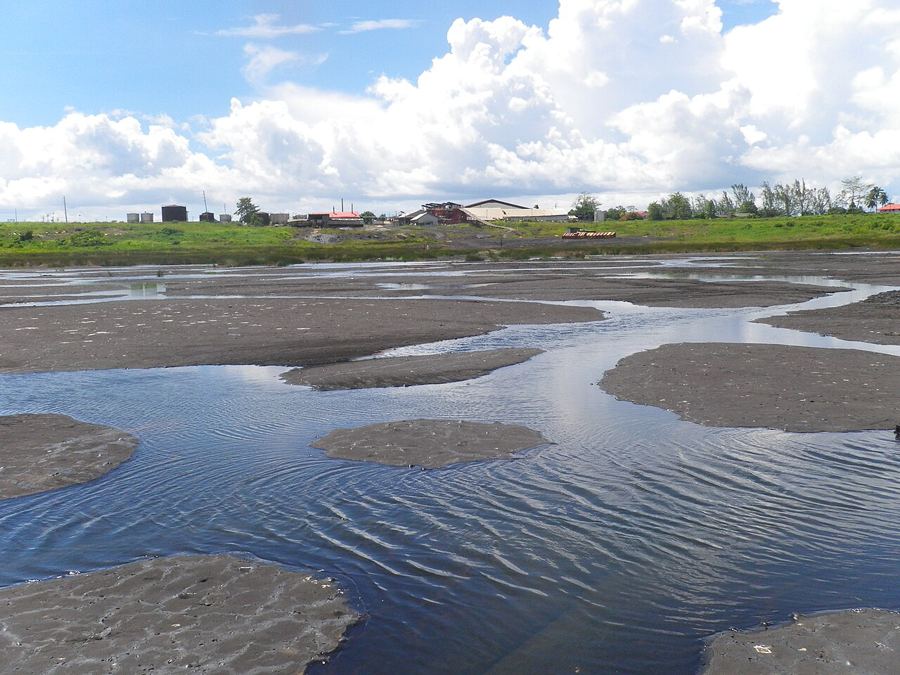
The setting is part of the experience. The Gulf of Paria here is calm and shallow, its mudflats exposed at low tide, and the light over the water is soft at either end of the day. Prayer flags, called jhandi, flutter on bamboo poles near the shore, each marking a prayer offered by a family. Wading birds work the flats, and pelicans and frigatebirds drift overhead.
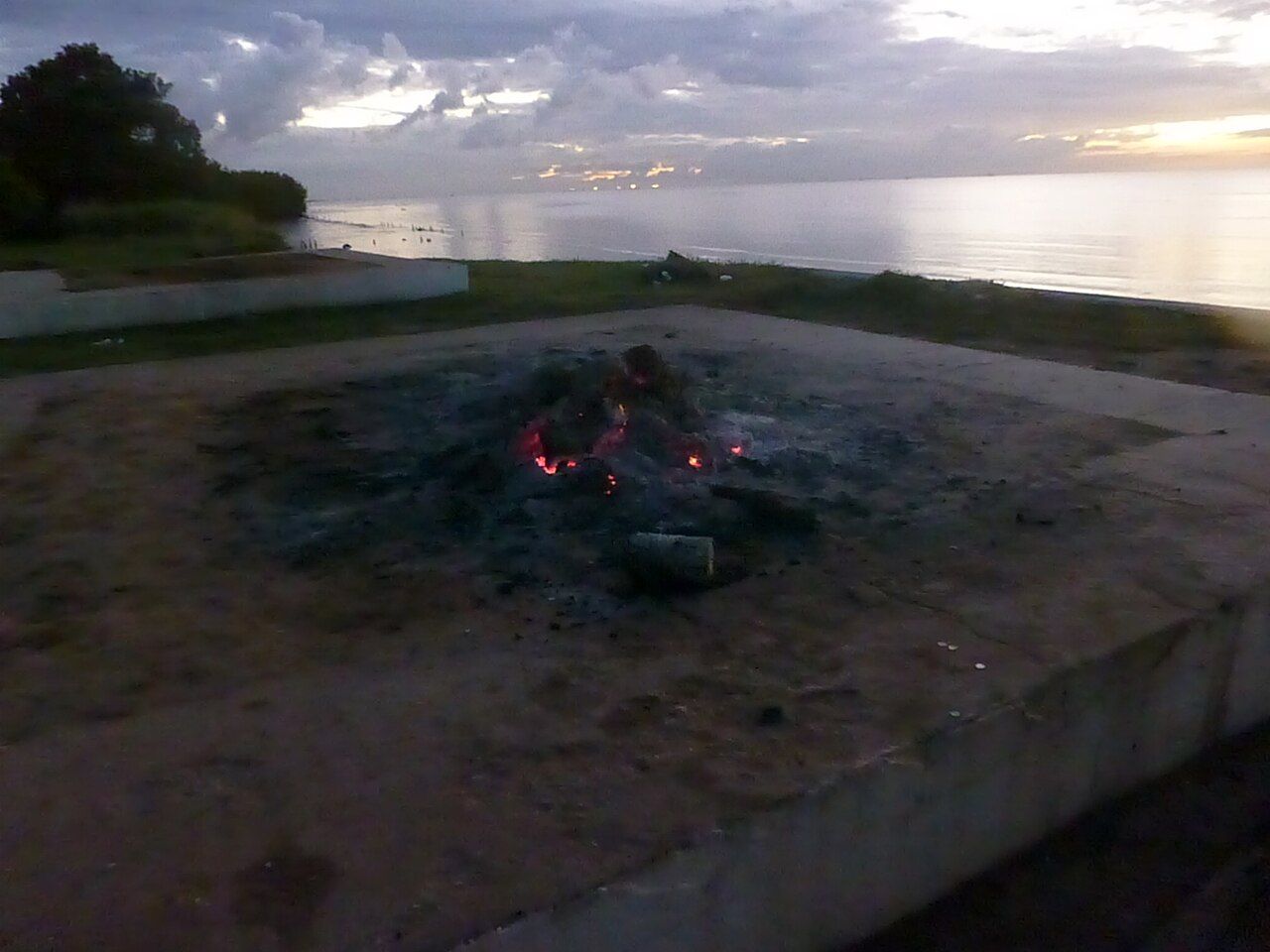
Along the shore nearby is an open-air cremation site, where Hindu families hold last rites beside the water in the traditional way. It is a place of mourning and should be treated as such: do not photograph ceremonies or people, keep well back if one is under way, and leave the space to the families.
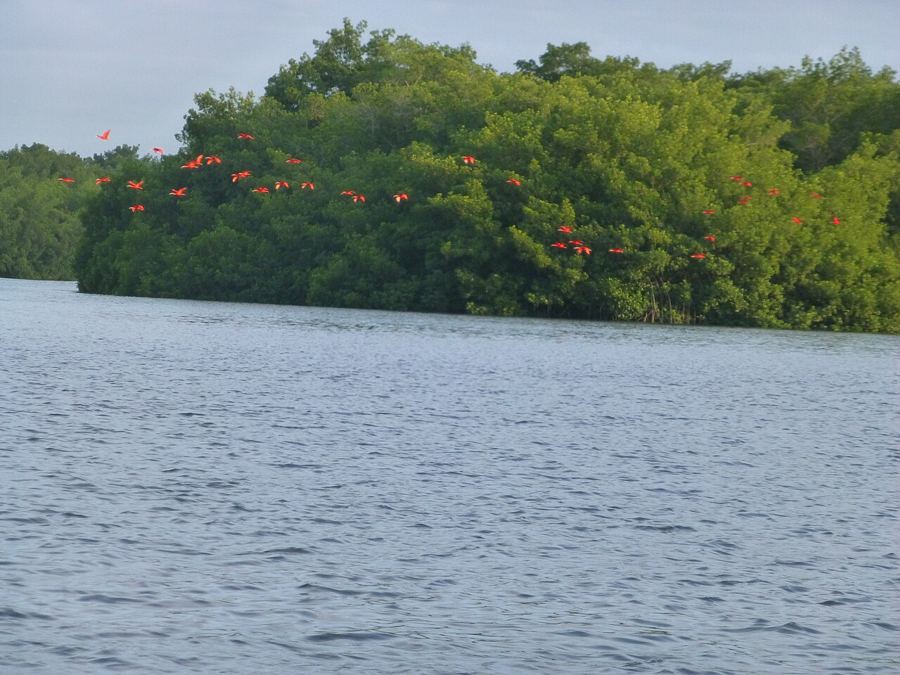 Another lime · Port of SpainScarlet ibis at dusk in the Caroni Swamp
The Hanuman murti at Carapichaima
A short drive inland, at Carapichaima, the Dattatreya temple compound holds one of the largest statues of Hanuman outside India. The great murti, painted in bright colours, rises high above the surrounding cane country and the houses of the village, and can be seen from a distance as you approach. The temple itself is richly decorated in a South Indian style, with carved and painted figures.
Visitors are usually welcome at the compound, though the same courtesies apply: modest clothing, shoes off where asked, and patience during worship. Opening times vary with the religious calendar, so check before you go if you want to see inside.
Indian heritage in central Trinidad
From 1845 onward, ships brought indentured labourers from India to work on Trinidad's sugar estates after the end of slavery. Many stayed when their contracts ended, settling in villages across the Caroni plain and central Trinidad, and their descendants now form a large part of the population. Indian Arrival Day, a public holiday on 30 May, marks the first arrival.
That heritage is visible everywhere in the central districts: temples and mosques among the villages, prayer flags in front yards, roadside stands selling sweets, and music that blends Indian instruments with Caribbean rhythm in chutney. The food you find all over the country, from curry to roti, grew from these kitchens, and doubles and roti are a good place to start tasting it.
Driving between Waterloo and Carapichaima you pass through cane fields and small towns where life moves at its own pace. The landscape is flat and open, a contrast to the forested hills of the north, and in the evening the sky is wide.
Divali and other festivals
Divali, the festival of lights, is a national holiday, usually falling in October or November by the Hindu lunar calendar. On the night itself, families light hundreds of small clay lamps called deyas, setting them along walls, steps and bamboo frames bent into arches and patterns. Whole villages glow, and visitors are often welcome to walk the lit streets. In the days before, a large Divali exhibition and cultural programme is held in central Trinidad.
Phagwa, the spring festival also known as Holi, is celebrated with songs and with coloured powder and water thrown in good spirits. Both festivals are joyous and open, but they are religious occasions first; follow the lead of the people around you and ask before photographing families.
Planning a visit
Waterloo lies south of Port of Spain, off the main road through Couva, and is easiest to reach by car or taxi; public transport runs to the larger towns but connections to the shore are less direct. The temple, the shore and Carapichaima fit comfortably into a half day, and they pair naturally with the evening boats at the Caroni Swamp, which lies on the way back north. If you are heading on to the south, the Pitch Lake at La Brea is a further drive down the coast.