Food in Trinidad and Tobago is a mix of everything that came to the islands: West African, Indian, Chinese, Spanish, French, British, Portuguese and Syrian-Lebanese influences, layered into dishes that are now entirely local. Much of the best eating happens at roadside stands, small shops and family tables rather than in formal dining rooms. You eat with your hands, you ask for "slight" or "heavy" pepper, and you queue where the queue is longest.
Doubles in the morning
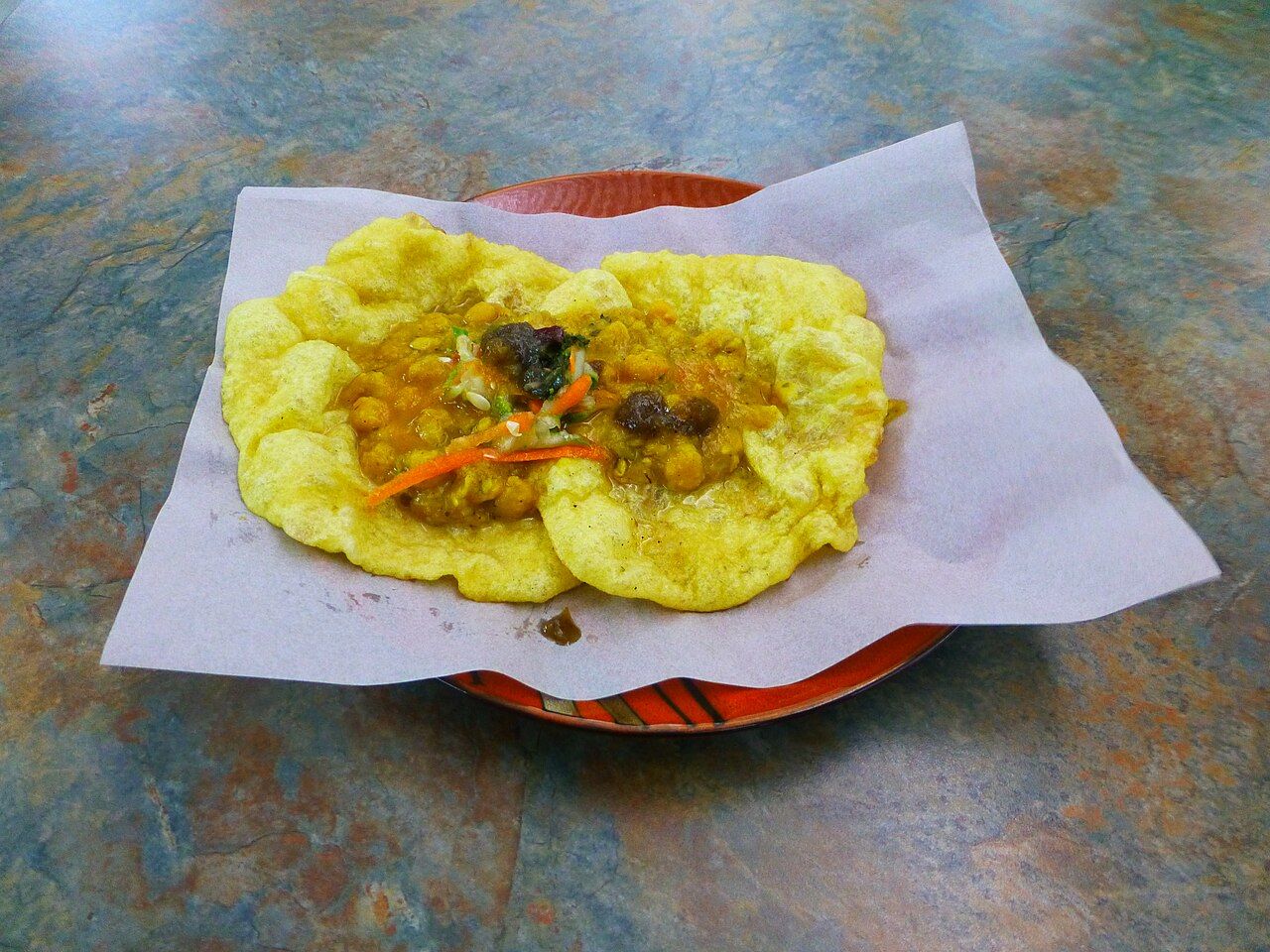
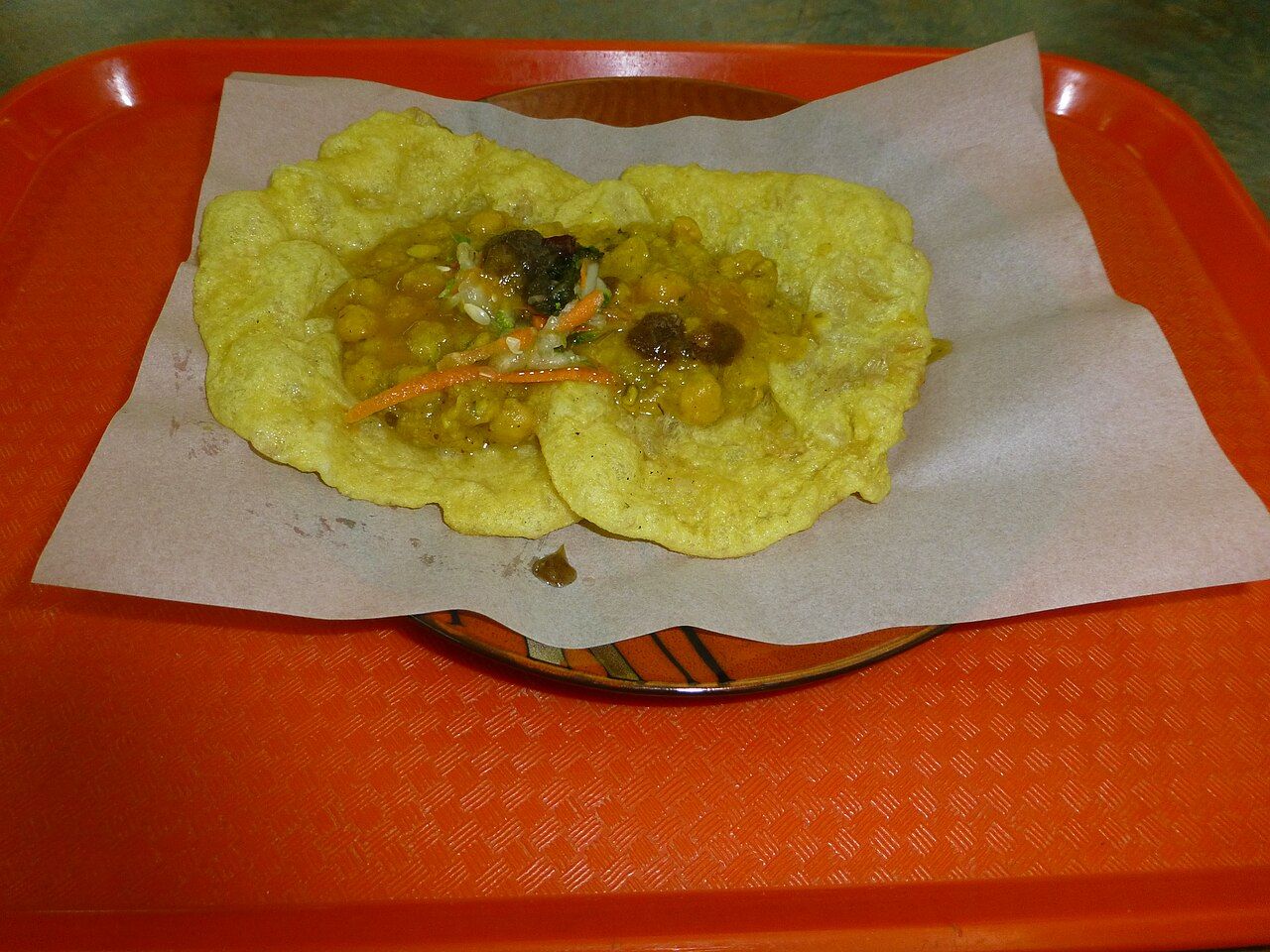
Doubles are the island's favourite breakfast. Two small rounds of soft fried bread called bara are laid on a square of paper, topped with curried chickpeas known as channa, and finished with a choice of sauces and chutneys: tamarind, mango, cucumber, shado beni (a pungent green herb) and pepper sauce. The vendor folds the paper round it and hands it over, and you eat it on the spot, carefully, because it drips.
Doubles vendors set up early, often at dawn, at roadsides, junctions and outside markets, and many sell out by mid-morning. They are cheap, filling and fast. When ordering, say how much pepper you want: "slight" is a little, "heavy" is a lot, and "no pepper" is fine too. Most people eat two or three.
Roti and curry
Roti in Trinidad usually means a flatbread wrapped around a curry filling to make a large, soft parcel. The most common bread is dhalpuri, which has a thin layer of ground split peas cooked inside it. Another, paratha, is torn and shredded on the griddle until it looks like a ragged pile of cloth; it is known as buss up shut, from "burst-up shirt", and served alongside curries to tear and dip.
Fillings include curried chicken, goat, duck, shrimp, potato, pumpkin and channa, and many shops offer a vegetarian roti with several sides. Curry here is distinctive, built on a blend of spices fried in oil before the meat goes in, with plenty of green seasoning, a blend of herbs, garlic and pepper. Roti shops are found across the country, especially in central and south Trinidad, and are usually busiest at lunch. The Indian roots of this food are explored in the Temple in the Sea and central Trinidad.
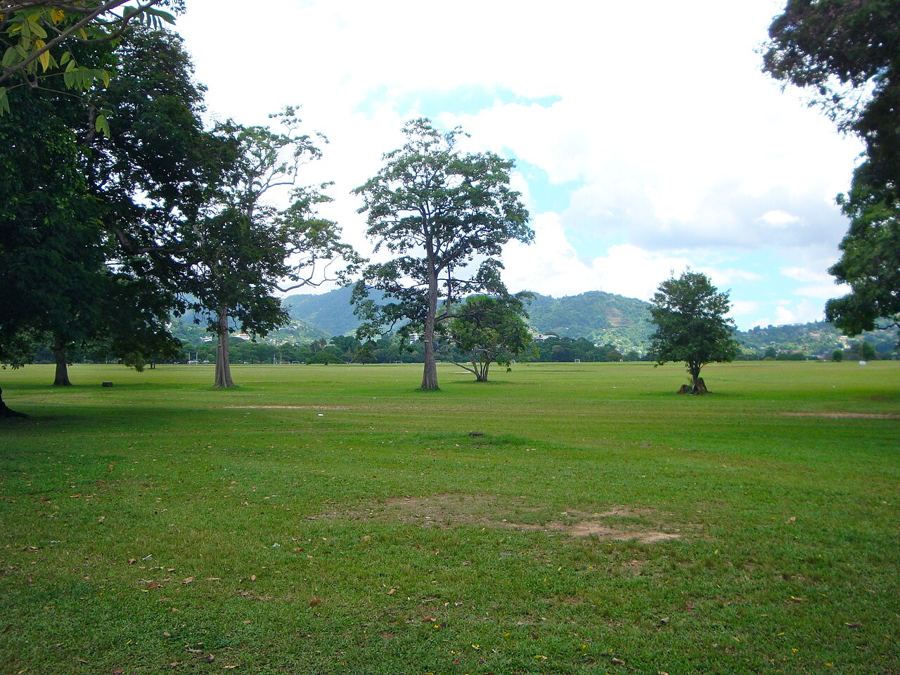 Another lime · Port of SpainPort of Spain around the Savannah
Pelau, callaloo and Sunday lunch
Sunday lunch is the great home meal. Pelau is a one-pot dish of rice, pigeon peas and meat, usually chicken, browned first in caramelised sugar to give it a deep colour and a sweet, smoky flavour, then cooked with coconut milk and seasoning. It is the dish people take to the beach or a river lime, packed in a pot and shared out on paper plates.
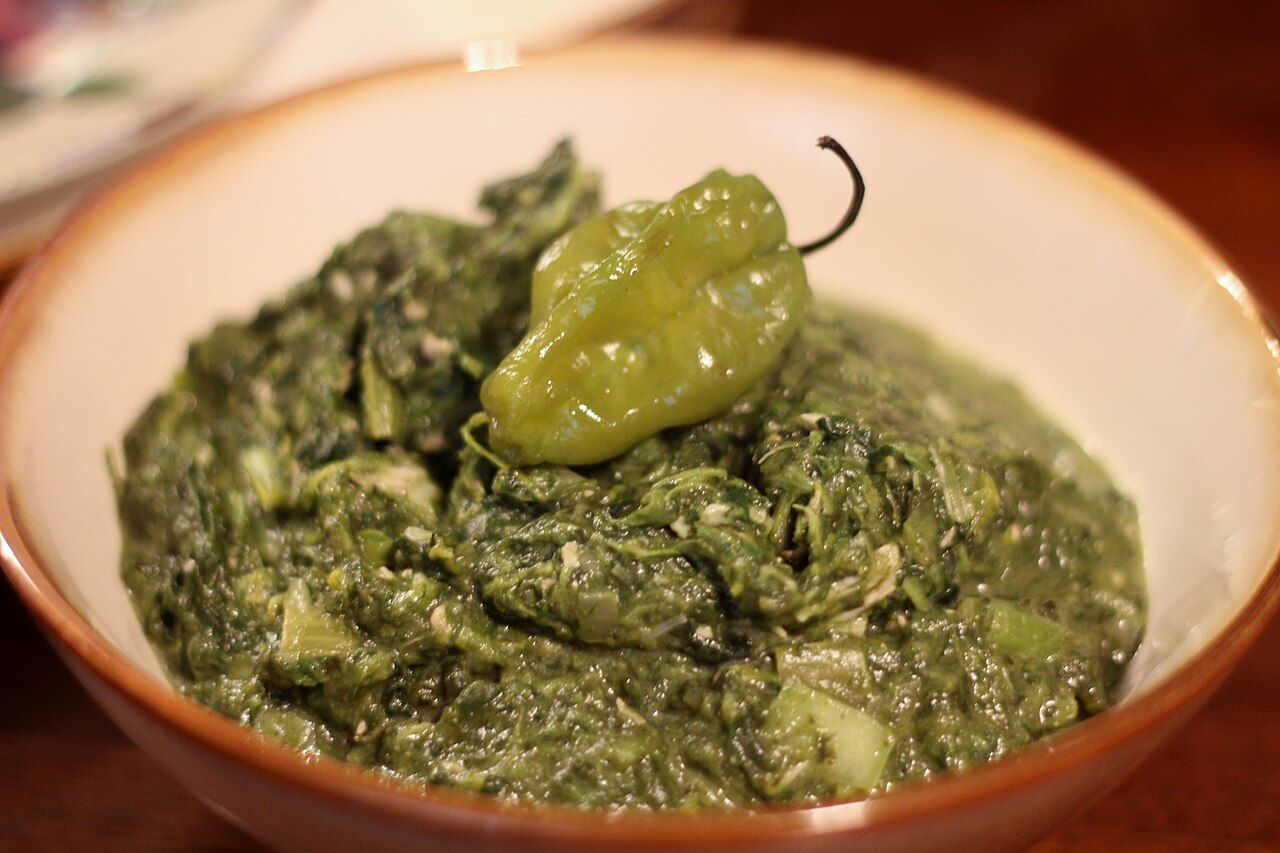
Callaloo is a thick, green soup made from the leaves of the dasheen plant, cooked down with okra, coconut milk, onion, garlic and pepper, sometimes with crab or salted meat. It is smooth and rich, served alongside rice, stewed chicken, macaroni pie and salad as part of a Sunday spread. If you are invited to a home on a Sunday, there is a good chance it will be on the table.
Bake and shark, chow and snacks
Bake and shark is fried fish in a fried bread called a bake, piled with toppings and sauces. It is most associated with the beach at Maracas on the north coast, where stalls line the car park, and is covered in the North Coast Road to Maracas. Note that shark populations are under pressure worldwide; many stalls also offer other fish, and you may prefer to ask for that.
Chow is fruit, often green mango, pineapple or cucumber, chopped and tossed with salt, pepper, garlic, shado beni and lime. It is sharp, hot and refreshing, sold in bags at roadsides. Other snacks include pholourie, small fried balls of split-pea dough served with tamarind sauce; aloo pie, a fried pastry filled with spiced potato; corn soup, sold late at night at parties and fetes; and fresh coconut water, cut open in front of you from a cart.
- Doubles: a morning snack of bara and channa.
- Pholourie: split-pea fritters with tamarind sauce.
- Aloo pie: fried pastry with spiced potato.
- Chow: chopped fruit with pepper and herbs.
- Corn soup: a hearty soup sold late at night.
Eating well and safely
Street food is part of daily life here, and most of it is fresh and cooked in front of you. A few simple habits help. Choose busy stands, where food turns over quickly. Watch that hot food is hot. Carry hand sanitiser or wipes and use them before you eat, as you will be eating with your fingers. If you are unsure of the water, drink bottled or filtered water; tap water in towns is treated, but many visitors prefer to be careful in the first days.
Pepper sauce here is serious. Even "slight" can be hot for those unused to it, and the local scotch bonnet and other peppers are among the hottest in common use. Start small. If you have allergies, ask carefully about ingredients; shellfish, nuts and dairy can turn up in unexpected places.
Where and when
Doubles are a morning food, gone by late morning in many places. Roti shops are busiest at lunch. Stalls around the Queen's Park Savannah in Port of Spain sell snacks and coconut water into the evening, and the Savannah area is described in Port of Spain around the Savannah. Prices are generally modest at stands and shops, but they change, so check before you go. Above all, ask people what they like to eat, and where; nearly everyone has an opinion, and it is usually worth following.