The road north from Arima climbs into the Northern Range in a series of tight bends, through bamboo, tall forest and the occasional village. A few kilometres up, on the slopes above the Arima Valley, lies the Asa Wright Nature Centre, set on what was once a cocoa, coffee and citrus estate. For decades it has been one of the most celebrated places in the Caribbean to watch birds, and its broad verandah, looking out over a valley of forest, is a lesson in how much life a tropical hillside holds.
An old estate turned over to nature
Like much of the Northern Range, the Arima Valley was once planted with cocoa and coffee, grown under the shade of taller trees. As the estates declined, the forest returned. The nature centre was established on one such estate, protecting its land and turning the old plantation house and grounds over to visitors who come to see wildlife rather than crops.
Walk the trails and you still see signs of that past: cocoa trees with their pods growing straight from the trunk, coffee bushes in the understorey, and the big shade trees that once protected the crop. Around them, native forest has grown back thick and tall. Birds do not care much about the history; the mix of forest edge, old orchard and deep woods suits them well.
The verandah
For many visitors the verandah is the main event. From its rail you look down into the treetops and across the valley, and feeders and flowering plants bring a steady stream of birds within a few metres. Hummingbirds are the stars: white-necked jacobins, copper-rumped hummingbirds and the tiny tufted coquette, among others, zipping in to feed and chasing each other off. Honeycreepers and tanagers flash blue, green and purple in the fruit trees.
Scan further out and you may pick up toucans, oropendolas building their long hanging nests, hawks soaring over the ridge and parrots crossing the valley in pairs. Agoutis, large rodents of the forest floor, sometimes wander through the grounds below.
Sit still for an hour and the birds come to you.
Early morning is best, when the light is soft and birds are busiest. Sit still for an hour and the birds come to you. It is one of the most relaxed kinds of birding there is, and it suits people who would never call themselves birders.
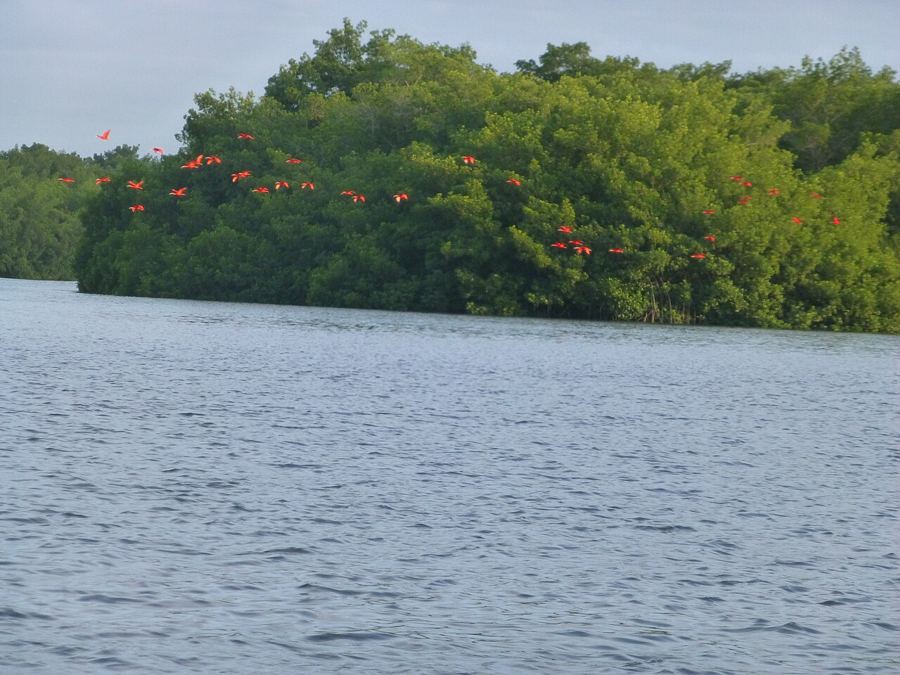 Another lime · Port of SpainScarlet ibis at dusk in the Caroni Swamp
A few of the regulars are worth learning before you arrive. The purple honeycreeper has bright yellow legs and a deep violet body, and the green honeycreeper is a vivid emerald. Bananaquits, small and yellow-bellied, are bold enough to land near your cup. Palm tanagers and blue-gray tanagers squabble over fruit, and crested oropendolas, big birds with yellow tails, make liquid, gurgling calls from the tall trees. Once you know these, it becomes easier to notice the rarer visitors.
Bring binoculars if you have them; close-focusing ones are best for the verandah, where birds come very near. A simple field guide to the birds of Trinidad and Tobago helps you put names to what you see, and staff and other visitors on the verandah are usually happy to point things out.
Bellbirds and manakins on the trails
Below the verandah, trails lead down into the forest. The sounds change as you go. One of the strangest is the call of the bearded bellbird, a loud, metallic bock that rings through the trees like a hammer striking an anvil. The male, with dark wattles hanging from his throat, often calls from a high, exposed perch, and you may hear him long before you see him.
Closer to the ground, look for manakins. These small, plump birds gather at display sites called leks, where males perform for females. White-bearded manakins make sharp snapping sounds with their wings as they dart between perches, and golden-headed manakins put on quick, buzzing displays in the branches. A guide or a knowledgeable staff member will often know where the leks are.
The trails can be steep and slippery after rain, and the forest is humid. Wear shoes with a good grip, carry water and take a light rain jacket even in the dry season. Watch where you put your hands: some palms have spines, and a few insects sting.
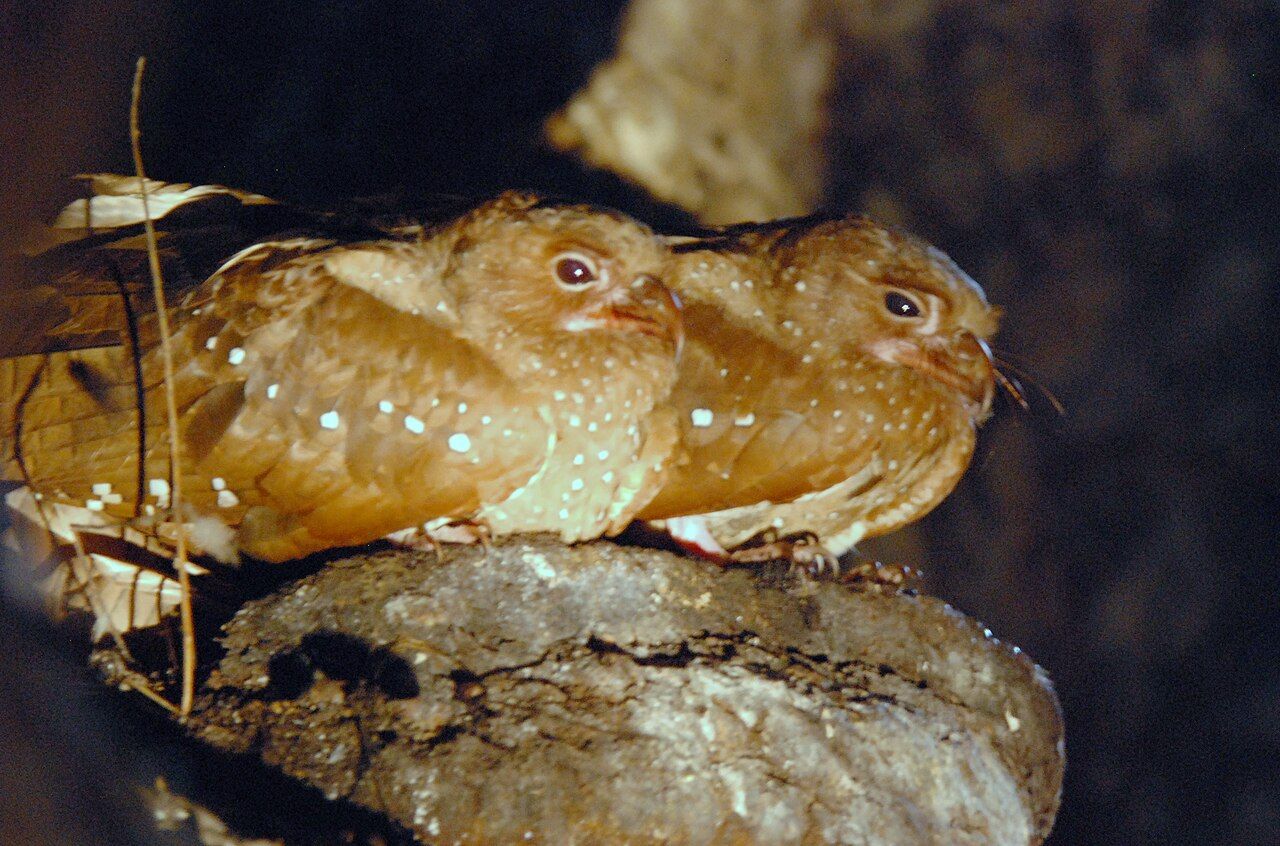
Oilbirds at Dunston Cave
In a narrow ravine on the estate lies Dunston Cave, home to a colony of oilbirds. These remarkable birds spend the day roosting on ledges in the dark and fly out at night to feed on the fruit of palms and other forest trees. They are among the very few birds that use echolocation, finding their way in the darkness with a series of sharp clicks, and the cave is full of their screeching calls.
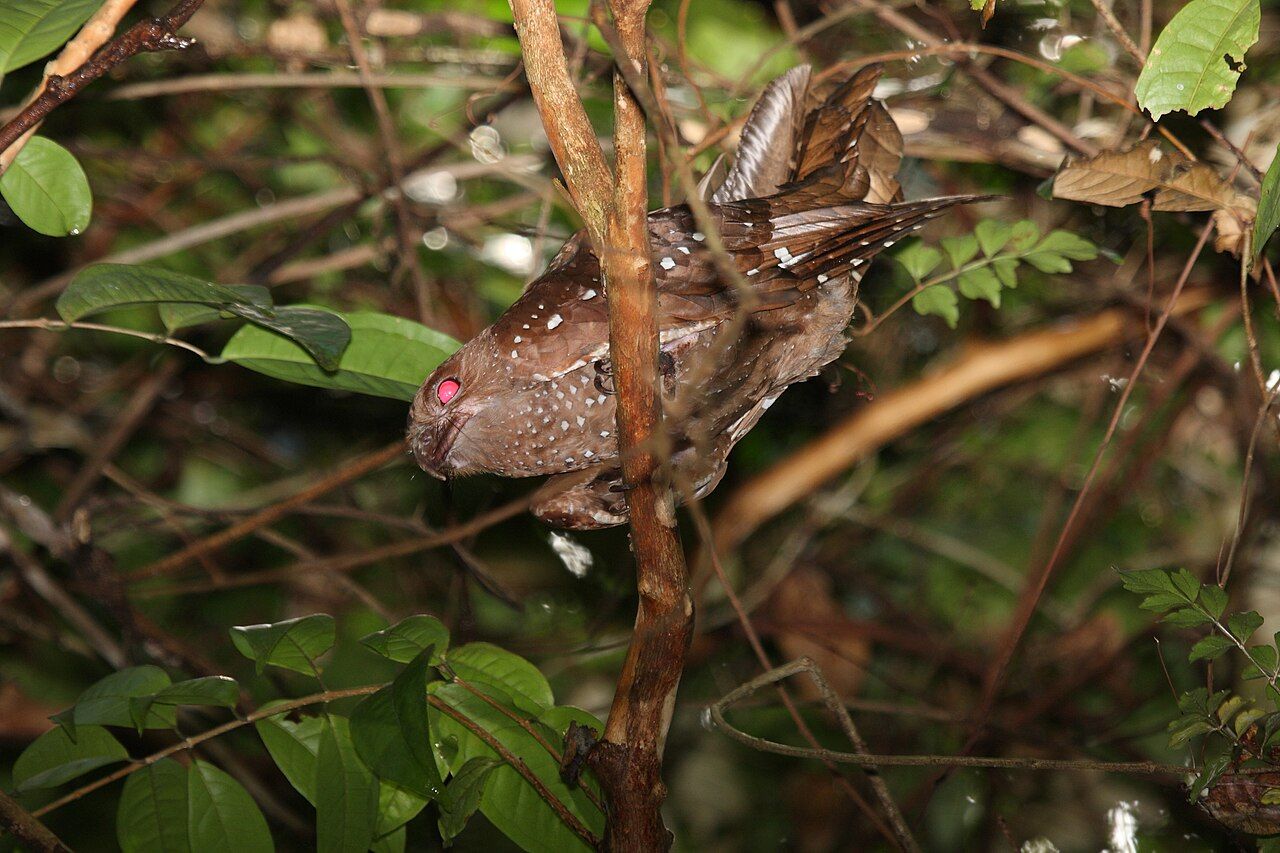
Oilbirds are sensitive to disturbance, and visits to the cave are guided, limited and sometimes restricted altogether, particularly in the breeding season. Ask at the centre what is possible on the day, and accept a no gracefully if the colony is being left in peace. If you do go, use no flash, keep voices down and follow the guide's directions on where to stand.
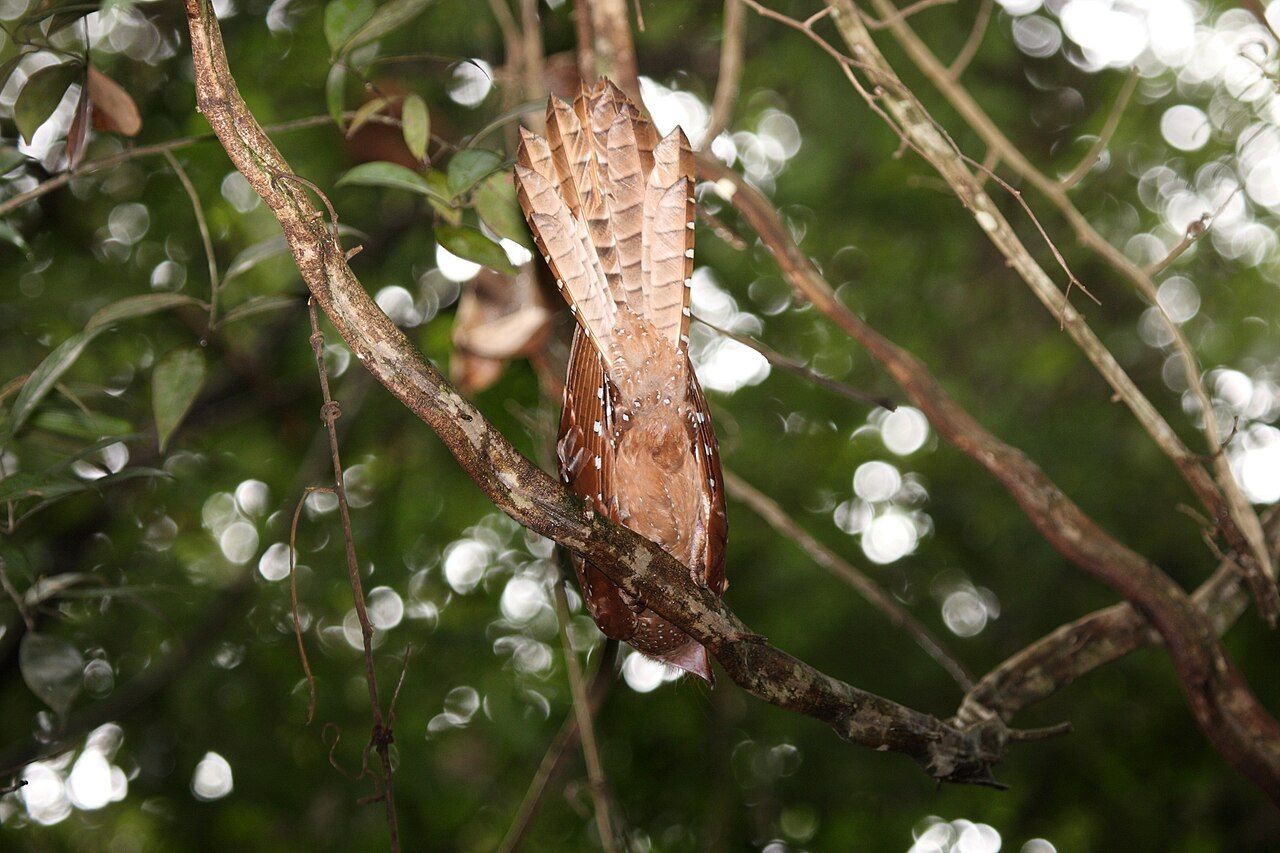
The oilbird's name comes from the fat stored in its young, which in the past were harvested for oil. Its Spanish name, guácharo, echoes the harsh cries that fill the caves where it lives. Seeing them, even briefly, is a reminder of how strange and varied the life of the Northern Range can be.
Fees, timing and the road beyond
The nature centre charges an entry fee for day visitors, and there may be separate charges for guided walks. Opening days, hours, fees and arrangements for the trails and cave change from time to time, so check before you go. Going on a weekday morning usually means fewer people on the verandah.
The Arima-Blanchisseuse road continues north past the centre, climbing over the crest of the range and then dropping to the coast at Blanchisseuse. It is a beautiful, slow drive through forest, with roadside birding at every bend, and it brings you out near the start of the trail to Paria Bay. The road is narrow and winding, sometimes affected by landslips after heavy rain, so drive carefully and allow plenty of time.
If birds are what draw you, pair a morning in the valley with an evening among the scarlet ibis at the Caroni Swamp, or a trip to Tobago's Main Ridge for a different set of forest birds. Together they make a fine introduction to the birdlife of both islands.