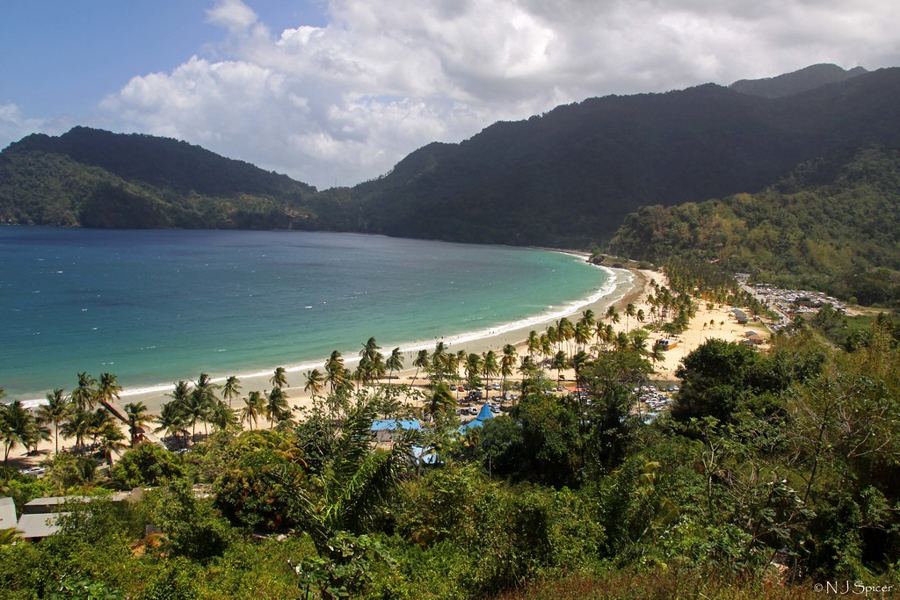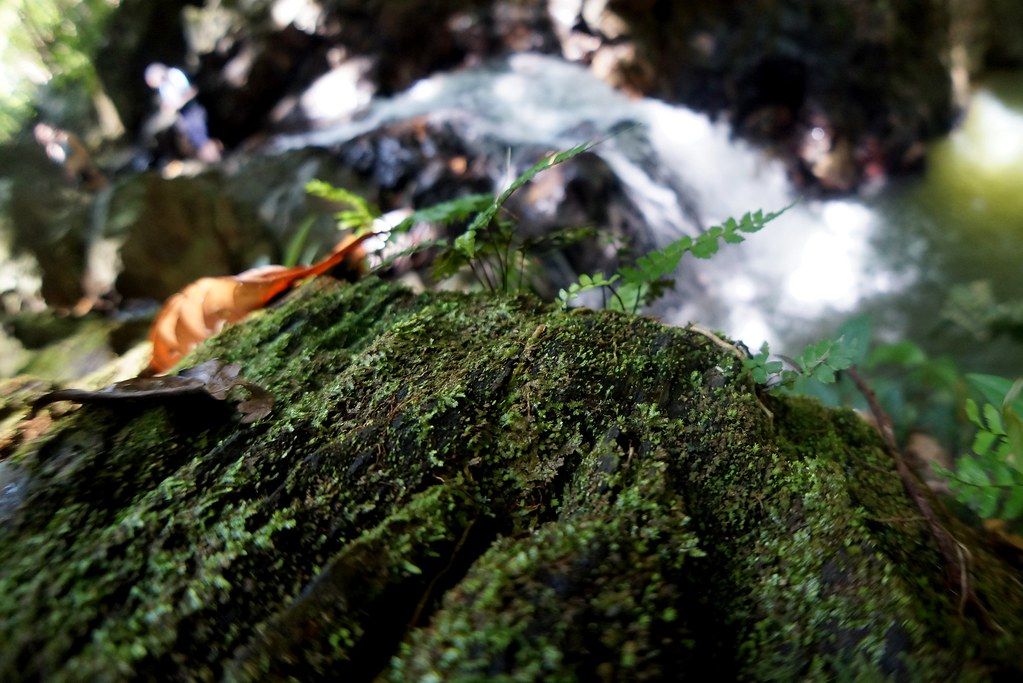
The northeast corner of Trinidad is a place of forested hills dropping steeply to a rough, beautiful coast. The Toco Main Road follows the shore through small villages, bays and headlands, and just behind it the land rises into the Matura forest, part of a protected national park. Rivers tumble out of those hills over rock ledges, and some of them form waterfalls with pools deep enough to swim in. The best known is the Rio Seco waterfall near Salybia, a short walk from the road and a favourite outing for families from all over the island.
The walk to Rio Seco
The trail starts from the Toco Main Road near Salybia, where a track leads inland into the forest. The walk takes most people somewhere between half an hour and an hour each way, along a path that is mostly clear but can be muddy, with a few stream crossings and some uneven ground. It is not a hard hike, but it is not a paved path either.
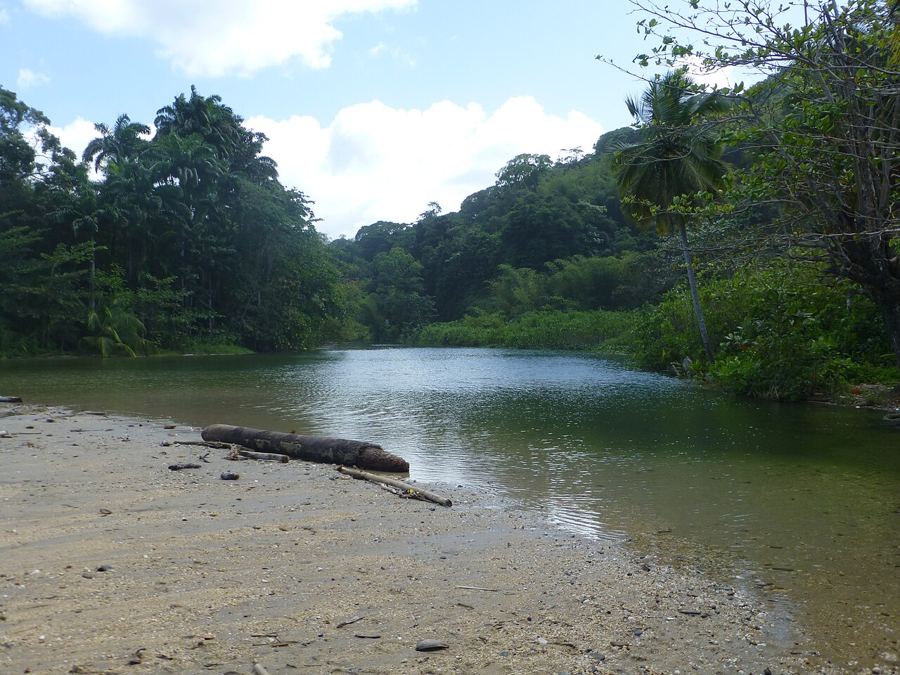
The forest along the way is tall and green, with big buttressed trees, palms, ferns and the calls of birds overhead. Look out for motmots, trogons and hummingbirds, and listen for howler monkeys in the distance. Leaf-cutter ants march across the trail in long lines, carrying pieces of leaf many times their size.
Wear shoes with grip that you do not mind getting wet; water shoes or sturdy sandals work well. Carry drinking water, as the forest is humid and you will sweat more than you expect.
The pool
The trail ends at a waterfall dropping into a wide, deep pool, its water a clear green over rock. Cliffs and forest close around it, and on a sunny morning the light comes down through the trees in shafts. It is a lovely place to swim, though the water is cool after the heat of the walk, and the pool is deep in the middle.
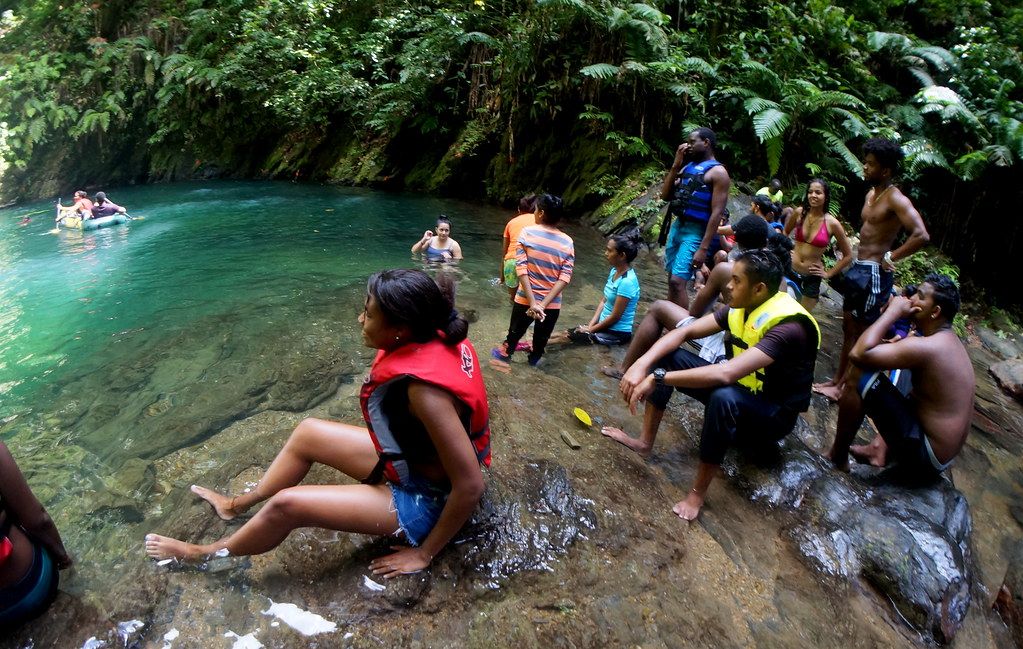
Weekends and public holidays can be busy, with families, groups of friends and music, and the pool has hosted fun events with inflatable rafts. If you want quiet, go early on a weekday. If you like company, a Sunday can be a cheerful lime, the Trinidadian word for relaxed hanging out, in the water and on the rocks.
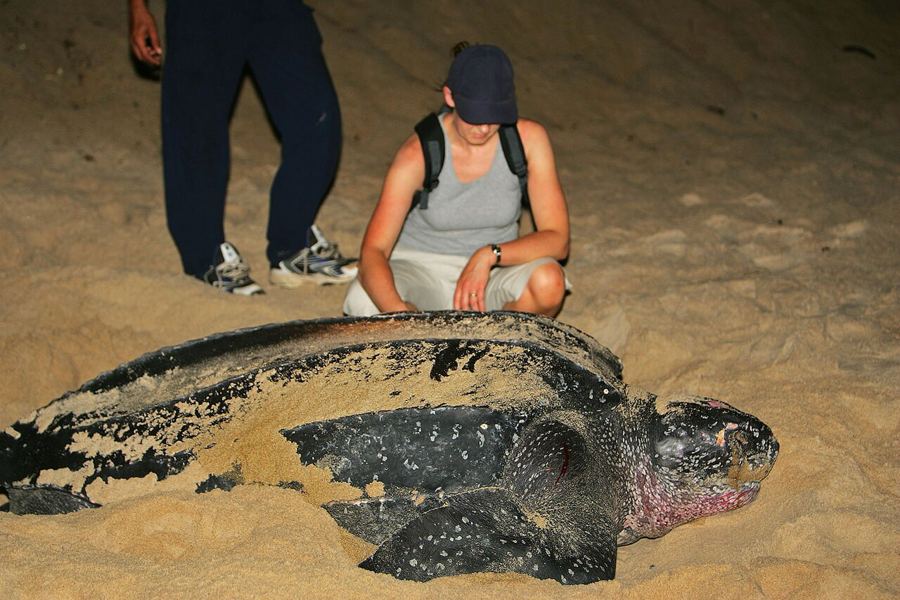 Another lime · East coastLeatherbacks in the dark at Matura and Grande Riviere
Flash floods and other cautions
Rivers in the Northern Range can rise very quickly after heavy rain, even rain falling higher up in the hills where you cannot see it. A calm pool can become a brown, fast-moving torrent in a short time. Treat this seriously.
- Avoid the walk during or just after heavy rain, and be extra cautious in the rainy season, roughly June to December.
- If the water turns muddy, starts rising or you hear a roar from upstream, get out of the river at once and move to higher ground.
- Do not jump from rocks unless you know the depth, and never dive into unfamiliar water.
- Go with at least one other person, and let someone not on the walk know your plans.
Keep valuables to a minimum and carry what you need in a dry bag. As with many popular spots, do not leave anything visible in a parked car. Check your own government's current travel advice for general guidance before your trip.
Other falls along the coast
Rio Seco is not the only waterfall in the area. Rampanalgas Falls, a little further along the coast towards Toco, is smaller and closer to the road, with mossy rocks and ferns along its banks. Other rivers in the Matura forest have falls and pools of their own, some reached only by longer and rougher hikes. For those, a local guide who knows the paths and the river is a good idea.
Respect the places you visit. Take your rubbish out with you, avoid soap or shampoo in the river and leave plants and animals as you find them.
The Toco road
The Toco Main Road continues north and east from Salybia, winding along the coast past fishing villages, small beaches and rocky headlands. Salybia Bay itself has a sandy beach, but like the rest of this Atlantic coast the sea can be rough, with strong currents, so swim only when it is calm and near others.
At the end of the road lies Toco, at the northeastern tip of Trinidad, where the Atlantic meets the Caribbean Sea and on a clear day you may see Tobago on the horizon. From there the road turns west along the north coast towards Grande Riviere, one of the great leatherback nesting beaches. Further south, Matura and the east coast lead on towards Manzanilla and the Cocal.
Making a day of it
The northeast is a long drive from Port of Spain, especially in traffic, so start early. Spend the morning at Rio Seco while the forest is cool, eat lunch near the beach, then drive on to Toco for the views in the afternoon. If you are visiting in the turtle season, stay on for an evening on the beach.
Facilities along the coast are limited, so carry water, snacks and cash. Fuel up before leaving the main towns.
Pack light for the trail: swimwear under your clothes, a small towel, a dry bag for your phone and a bag for rubbish. Leave the cooler in the car and enjoy a proper meal once you are back on the road. On the drive home, the low sun over the Atlantic and the fishing villages settling into evening are a fine way to end the day, and a good reason not to rush.